
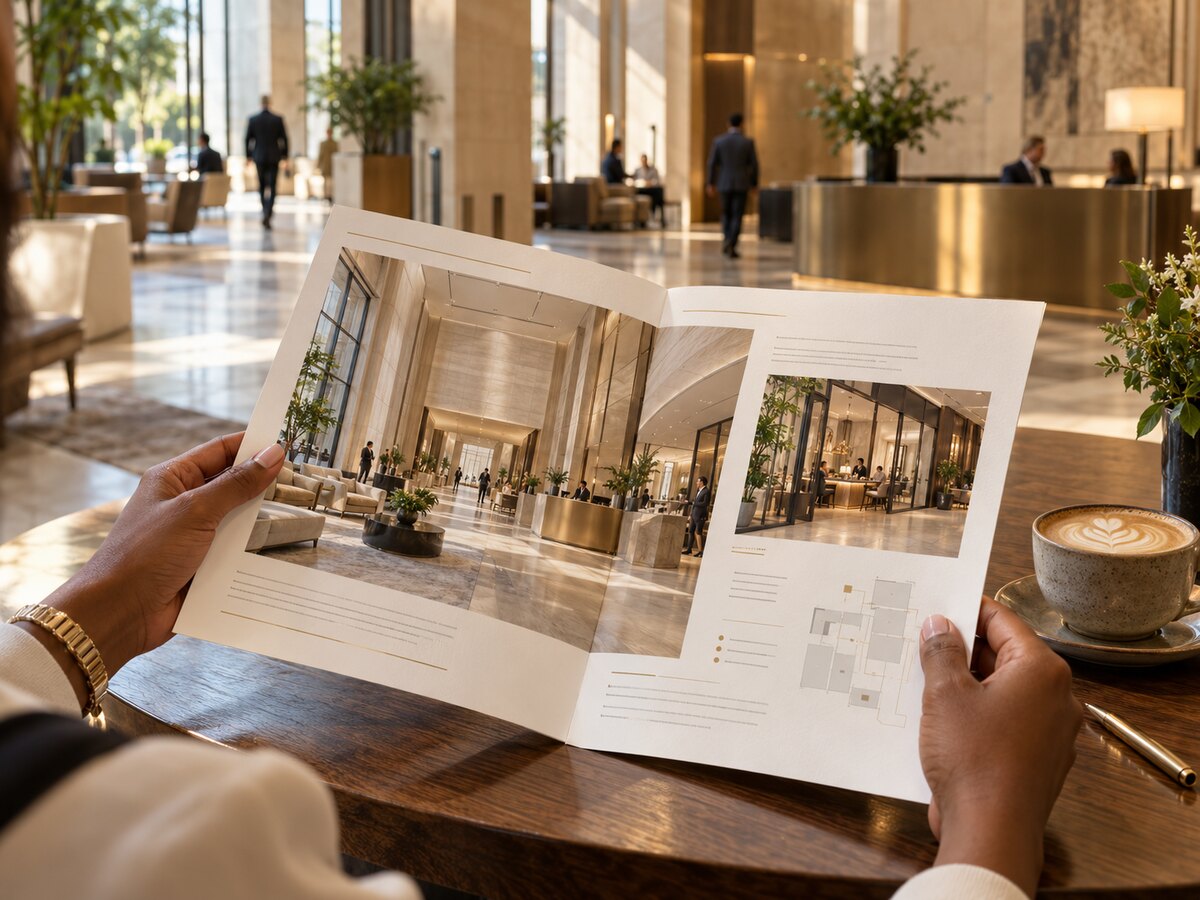
The inbox already has enough announcements
An inspection notice matters. So does a change in access or a service interruption. Tenants need timely, accurate information through the appropriate channels.
A newsletter can carry some of that information, but it can also help people use the property more confidently and understand what is happening around them.
That requires an editorial purpose. “Send something quarterly” describes a production schedule. It does not explain what the reader should gain from opening it.
Start with the recurring questions your property team receives. Then decide what belongs in the newsletter, what needs a direct notice and what should remain available elsewhere for reference.
Give essential communication its own clarity
Do not bury important operational details beneath a lifestyle introduction. If a notice requires direct or timely distribution through the property’s established process, the newsletter should not become its only route.
When including an essential update, state what is changing, who is affected, when it applies, what action is required and where questions should go. Verify the details with the responsible team.
Use a visible heading and a direct next step. A polished layout should help the tenant find the information quickly, including on a phone.
If the newsletter summarizes a longer notice, link to the current source. Avoid creating several versions of a changing instruction without a clear owner responsible for keeping them consistent.
Add usefulness beyond the notice board
Build recurring sections around practical questions: how to access a service, where visitors can find instructions, what an open business offers or how tenants can submit a property-related question.
An illustrative business spotlight might explain a retailer’s current services, location and confirmed hours, with a link to its own information. It should provide useful context rather than an unsupported endorsement or a promise of customer demand.
A service explainer could answer a question staff receive repeatedly. A short event preview could describe the purpose, participation details and accessibility of the activity.
The newsletter earns attention when the tenant can do something useful with what it contains.
Choose a manageable number of sections. A concise issue with accurate information is more useful than a long publication padded to fill a template.
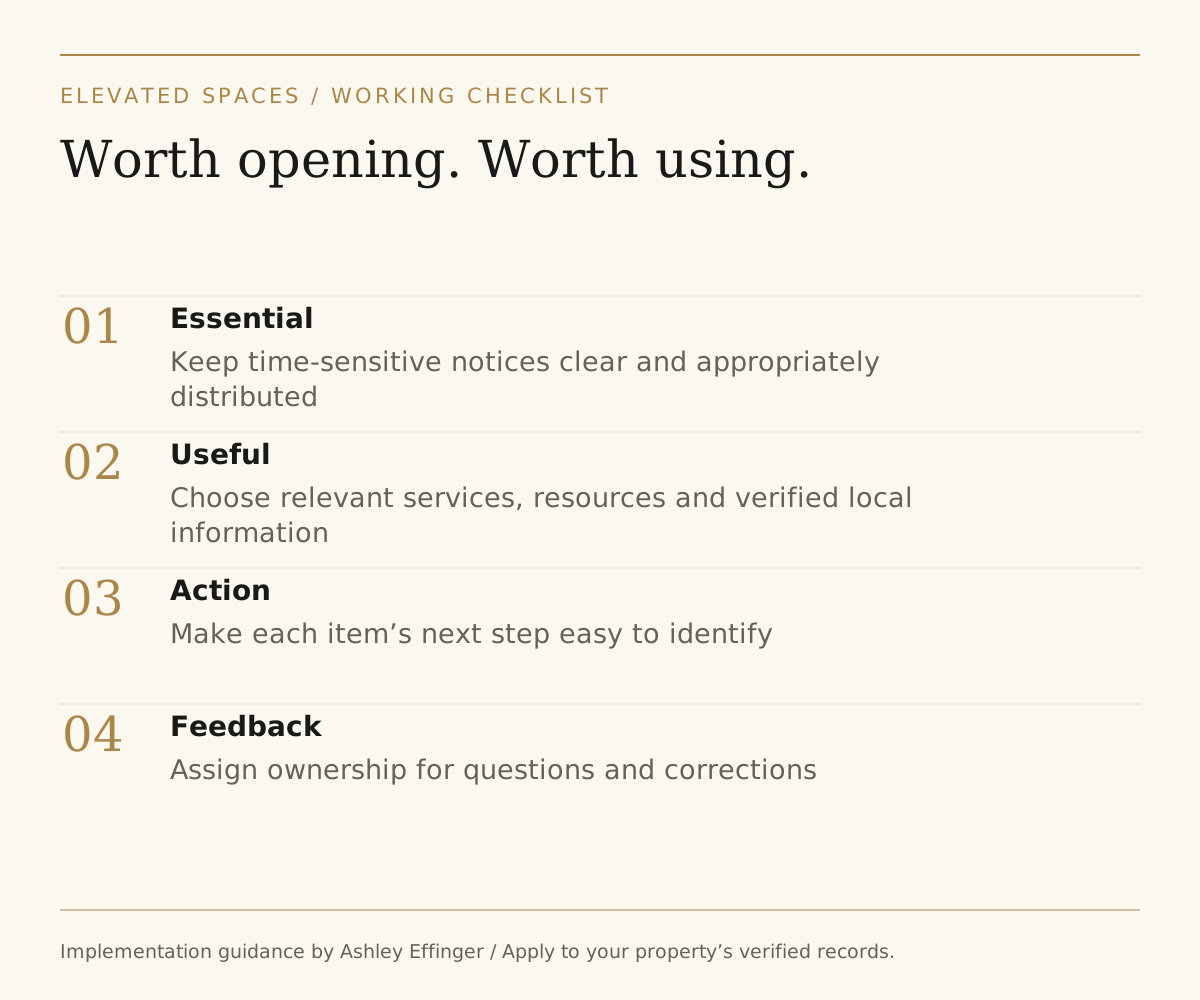
Read the framework as text
Practical review checklist. Essential: Keep time-sensitive notices clear and appropriately distributed. Useful: Choose relevant services, resources and verified local information. Action: Make each item’s next step easy to identify. Feedback: Assign ownership for questions and corrections.
Establish a repeatable editorial process
Maintain a simple content brief with the item, reader benefit, factual owner, source, deadline and intended action. Obtain the necessary approvals before distribution.
Set a cut-off for information that can change, and identify where readers can confirm current details. Record corrections so a mistake does not quietly reappear in the next issue.
Keep the voice consistent with the property while making the instructions straightforward. Essential information should remain easy to understand without interpreting a brand phrase.
Plan the distribution using approved contact records and the organization’s communication practices. Separate the operational purpose from promotional choices so the newsletter serves the people receiving it appropriately.
Measure usefulness through several signals
Review delivery and engagement information where available, but do not make an open-rate figure carry the entire evaluation. Look at relevant link use, replies, recurring questions and whether tenants can find the resource when needed.
Define the period and the action being measured. Clicking an event link is different from registering, attending or reporting that the activity was useful.
Invite focused feedback occasionally: which information was helpful, which question remains unanswered and what readers need next. The responses describe those who reply, so interpret them with that limit in mind.
The Tenant Experience & Engagement Planner is available now to organize the calendar, event briefs and feedback process for office, retail and mixed-use teams.
The next issue should do more than prove that the property has news. It should help the tenant understand why that news matters and what to do with it.