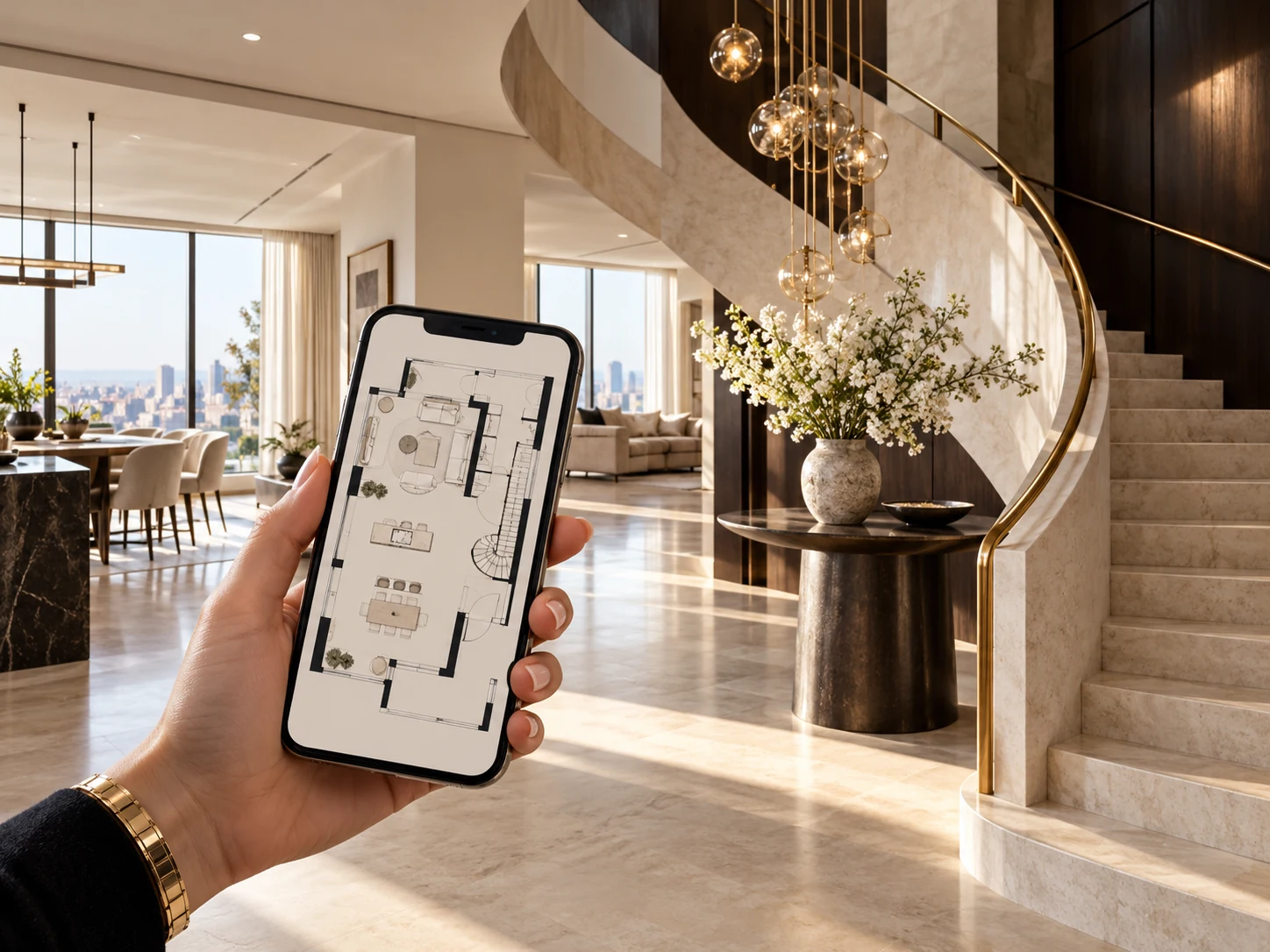
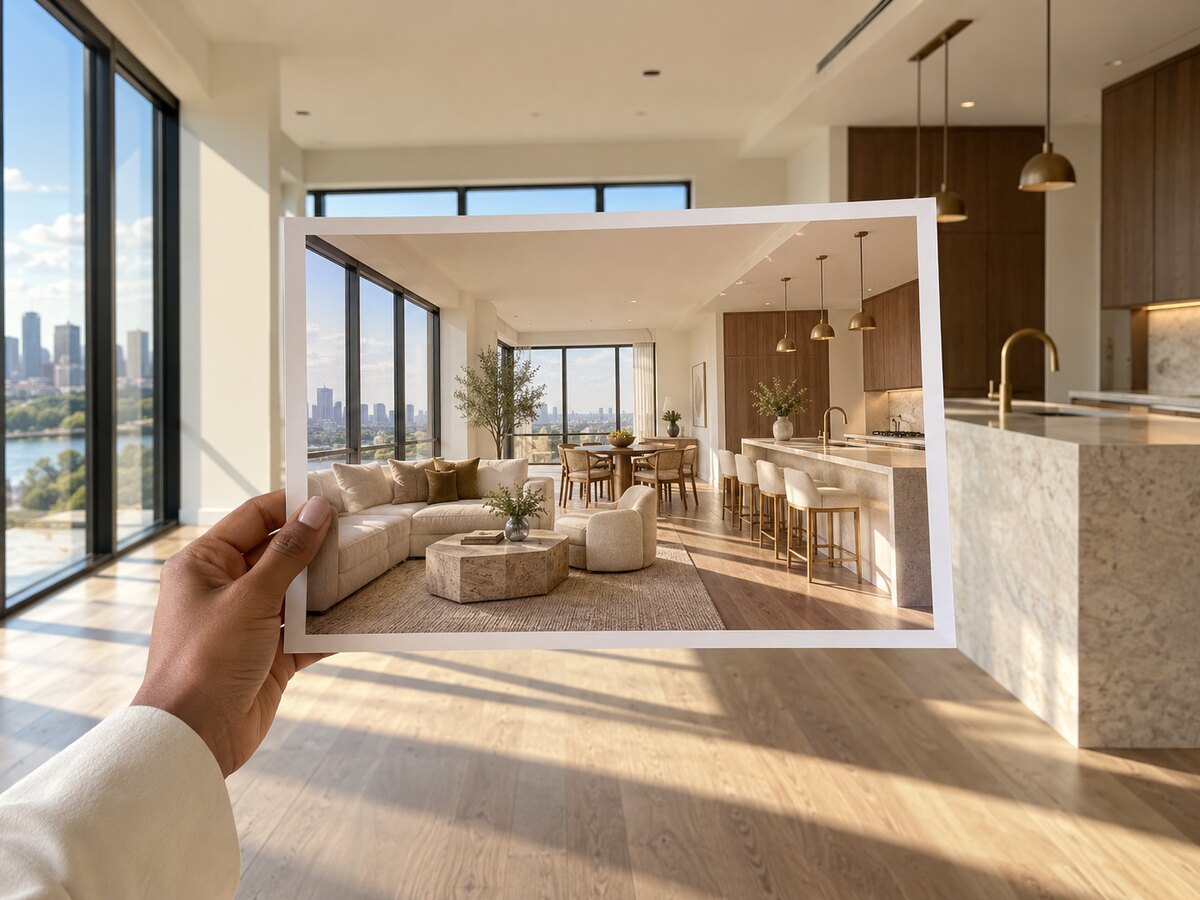
The model keeps talking after the tour
The prospect remembers the light, the furniture arrangement and the way the kitchen opened into the living area. The available home has a different view, another finish package and a narrower space beside the island.
None of those differences automatically makes it the wrong home. Leaving them unexplained makes the decision harder.
A model is a representation with specific conditions. Marketing should help people understand which features transfer to the available home and which do not. That work begins before the tour and continues through photography, floor plans and follow-up.
Start with the information a reasonable prospect could infer from what the team shows. Then compare it with the inventory being offered.
Make the differences inspectable
Choose one model-to-inventory comparison. Review layout, dimensions, finish package, included equipment, outdoor space, view, location within the property and current readiness. Verify each item with the responsible team.
Record the difference and where it should be explained. A finish variation may belong beside the relevant photographs. A different layout may require a clearly identified floor plan. A readiness question may need a direct update from leasing.
Avoid relying on a general disclaimer to carry details that materially affect the person’s evaluation. Help the prospect find the useful distinction at the moment they encounter the representation.
Keep this comparison current as available inventory changes. A document that was accurate last month can still create confusion today.
Use the available home as the reference point
Imagine a prospect who likes the model’s dining arrangement. Before suggesting the same setup in the available home, verify the relevant dimensions and layout. Decorative similarity is not proof that the furniture will fit.
Offer the actual drawing, current photographs where available or an opportunity to inspect the space. If an asset shows a different home, identify what it depicts and explain the relevant differences.
The same discipline applies to view photography and outdoor space. A photograph from a particularly favorable location should not imply every home has that outlook.
The model can create interest. Accurate information helps someone evaluate the home they would actually lease.
Give the team a consistent way to explain the distinction. An accurate answer should not depend on which person happens to give the tour.
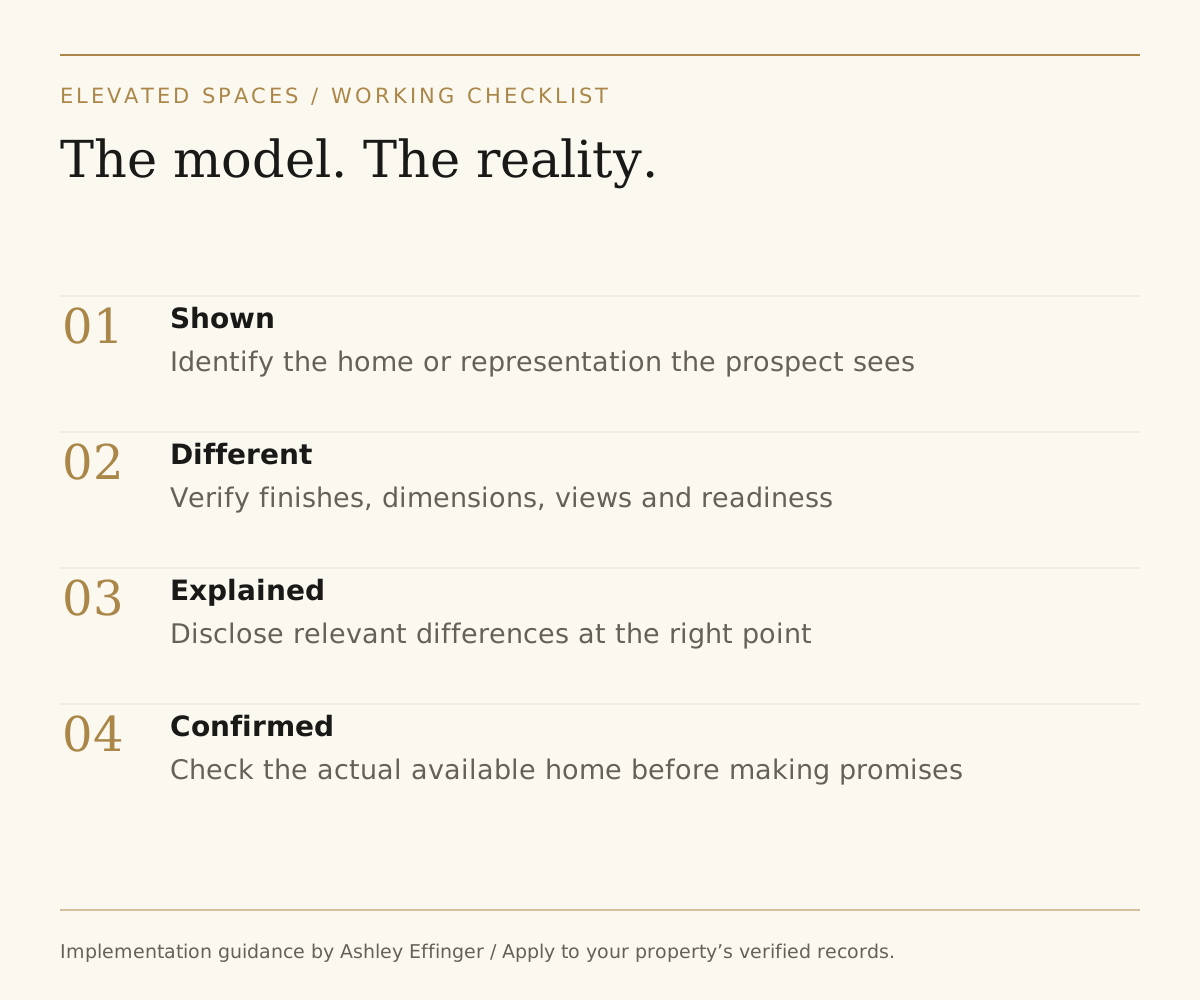
Read the framework as text
Practical review checklist. Shown: Identify the home or representation the prospect sees. Different: Verify finishes, dimensions, views and readiness. Explained: Disclose relevant differences at the right point. Confirmed: Check the actual available home before making promises.
Audit the digital journey with the same comparison
Open the listing and follow the route to the available home. Does the gallery clearly identify representative imagery? Can the visitor find the correct floor plan and current information without interpreting a collection of almost-matching assets?
Inspect captions, image order and the way finishes are named. A beautiful gallery can still leave the visitor unsure which kitchen belongs to the home under consideration.
Ask a colleague unfamiliar with the inventory to describe what they believe is being offered. Their interpretation may reveal ambiguity your team has learned to overlook.
Document the uncertain inference, not simply a preference for different photography. The useful change might be a caption, an additional image or a clearer route to the home’s details.
Close the gap before arrival
Before a tour of an available home, confirm readiness and the current facts the team plans to communicate. Where something is unfinished, provide an accurate status and avoid substituting reassurance for a verified update.
Afterward, review the questions the prospect still has. Some will reveal a missing explanation earlier in the journey. Feed those findings into the listing and the model-tour script.
Tour Readiness Checklist can structure the experience review. Add a model-to-home comparison beside it so the presentation and the actual inventory remain connected.
Measure whether the relevant information is complete and whether recurring questions decline in the records you maintain. Do not assume that clearer representation guarantees a lease.
A model should help people imagine a home. The rest of the marketing should help them understand exactly which home they are considering.
Leasing Follow-Up Toolkit
Carry the leasing conversation forward with a relevant answer, a clear owner and a useful next step.
Get the Follow-Up ToolkitWebsite Conversion Audit
Find the gaps between a campaign click, an informed floor-plan decision and a useful leasing inquiry.
Get the auditPut the perspective to work.
Explore positioning, marketing performance and experience strategy for luxury multifamily and Class A commercial properties.
Work with Ashley