

The campaign has a second audience
The lease is signed. The campaign gets a conversion. The resident gets a set of keys and a very immediate opportunity to evaluate everything your marketing said.
That is a consequential handoff. “Effortless living” becomes a question about parking instructions. “Thoughtful service” becomes a question about whether anyone knows the resident is arriving. The brand is being interpreted through details that rarely appear in a campaign report.
Your marketing now has a second audience: the people expected to deliver its promises. If they have never seen the message, or cannot identify what it means operationally, the experience begins with an information gap.
The practical response is to make the handoff visible. Start with one move-in journey and follow the expectations your team created along the way.
Build a short promise record
Review the listing, tour notes, follow-up messages and move-in communication. Identify statements a resident could reasonably understand as specific commitments. Separate confirmed features from preferences, requests and unresolved questions.
For an illustrative move-in, the prospect asked how to reserve the loading area. A leasing team member explained the process and promised to send instructions. The record should say who sends them, when, and where the confirmation is stored.
It should not say simply “white-glove arrival.” That phrase offers no useful direction to the person opening the office that morning.
Keep the record concise. Use a promise, an owner, a due date and a confirmation field. Store only information relevant to service delivery, following your organization’s information-handling practices.
Rehearse the arrival, not just the apartment
A ready home is essential, but it is only one part of arrival. Walk the route from the entrance a moving vehicle will use. Check the instructions, access arrangements and contact options the resident has received.
Can the resident find the correct place? Does the team know what happens if arrival is delayed? If there is a change, is someone responsible for communicating it before the resident encounters the problem?
Have the person performing the rehearsal use the actual message that will be sent. Familiar staff can navigate an unclear process from memory. A resident cannot.
A promise becomes operational when someone can point to the action that fulfills it.
Record the specific obstacle and the responsible person. A general reminder to “improve communication” will not repair a missing instruction.
Read the framework as text
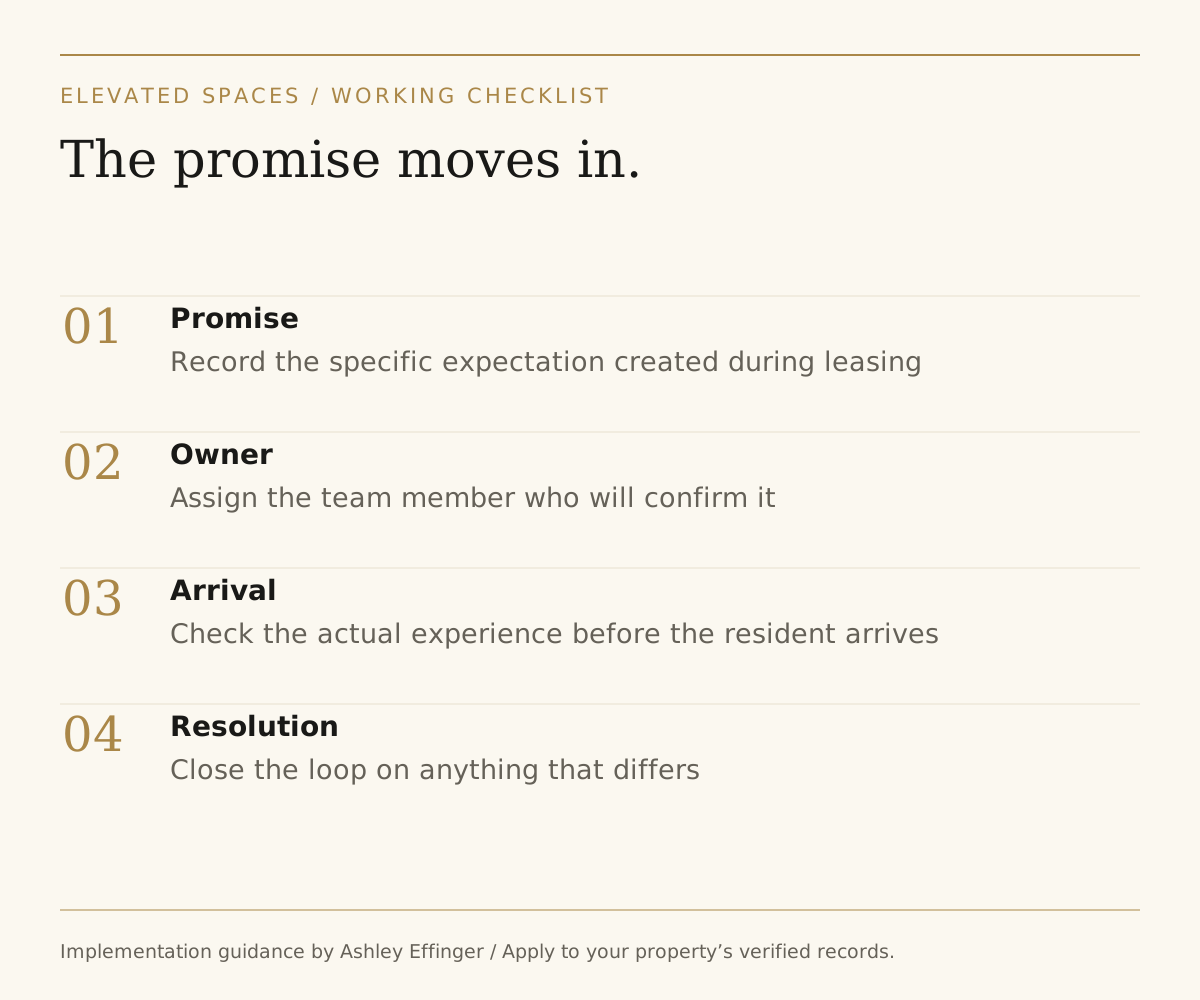
Practical review checklist. Promise: Record the specific expectation created during leasing. Owner: Assign the team member who will confirm it. Arrival: Check the actual experience before the resident arrives. Resolution: Close the loop on anything that differs.
Check the experience while it is still fresh
After arrival, ask a focused question: “Was anything about getting settled different from what you expected?” Give the resident a clear route for service requests rather than treating that conversation as a substitute for the normal process.
If an issue appears, acknowledge it, assign it and explain the next update. Avoid promising a resolution date the responsible team has not confirmed.
Review a small set of recent move-ins together. Look for repeated expectation gaps and trace each one to the point where it entered the journey. Was the marketing unclear? Was a tour explanation inaccurate? Was the information correct but never transferred?
Those are different problems. They require different changes. Record the distinction before deciding that the campaign needs new creative.
Bring the findings back to marketing
A monthly handoff review can be brief: one recurring gap, one operating change, one message to clarify and one follow-up date. Marketing should hear which claims are difficult to fulfill, and operations should see which expectations the next campaign will create.
Monitor completion of promised actions, recurring issues and the resident feedback you actually receive. These observations can guide improvements; they do not establish that one handoff change caused a later renewal or review.
Use the Tour Readiness Checklist for the pre-arrival experience, then extend the working record through move-in. The proposed Multifamily Renewal Experience Planner will address the longer journey. It is not available yet; subscribe for future tools and practical guidance.
The campaign earned the resident’s attention. The handoff is where the team begins earning confidence in the decision.
Leasing Follow-Up Toolkit
Carry the leasing conversation forward with a relevant answer, a clear owner and a useful next step.
Get the Follow-Up ToolkitMultifamily Renewal Experience Planner
Review promises, own issue updates and prepare renewal conversations with verified information.
Get the Renewal Experience PlannerFrom Vacancy to Campaign™
Turn one inventory challenge into a coordinated 30-day multifamily campaign.
Get the Campaign Planner