Give the image a job beyond looking expensive
The hero image is stunning. The gallery is immaculate. The prospect still cannot work out where the desk goes.
That is a photography problem worth discussing.
We ask property images to create desire, then act surprised when beauty alone does not answer a practical question. A wide-angle room shot can attract attention while leaving scale, circulation and actual use frustratingly vague.
Your photography brief needs a decision shot: an image chosen because it helps the viewer evaluate something that matters.
Build the photography brief around decisions. What does a prospect need to understand about this layout, this shared space or this arrival route?
The answer determines the shot. A wide view might establish the room.
A second angle might explain circulation. A measured plan can resolve a question that photography alone cannot answer accurately.
The decision shot is not a new photographic genre. It is a useful instruction to the team: capture the evidence needed for a particular choice.
A beautiful image and an informative image can be the same photograph, but that outcome is more likely when the brief names both jobs.
Before commissioning a shoot, review recent prospect questions with leasing. Identify which questions are visual, which need dimensions or written explanation, and which require an operational answer.
This keeps the camera from being asked to solve problems outside its role.
Turn the objection into a shot brief
Start with the questions leasing keeps answering. Can the viewer understand room proportions? Which configuration is shown? How does the space connect? Name the uncertainty before asking the photographer to solve it.
For an amenity, consider whether the prospect needs to see the setting, understand capacity or learn how access works. Photographing a room does not explain reservation procedures or operating hours.
Pair the image with current information rather than asking a caption to imply more than the property can support.
Include arrival images when finding the correct entrance is a recurring problem. A clear street-level view may be less glamorous than a dusk exterior and more useful in an appointment confirmation.
Each asset earns its place by solving a real communication task.
Give every requested shot a destination. Images without a planned use can accumulate while the same critical question remains unanswered.
A short, purposeful list can produce a more useful library than an ambitious list built around room names alone.
The right image reduces the amount of explaining the wrong image creates.
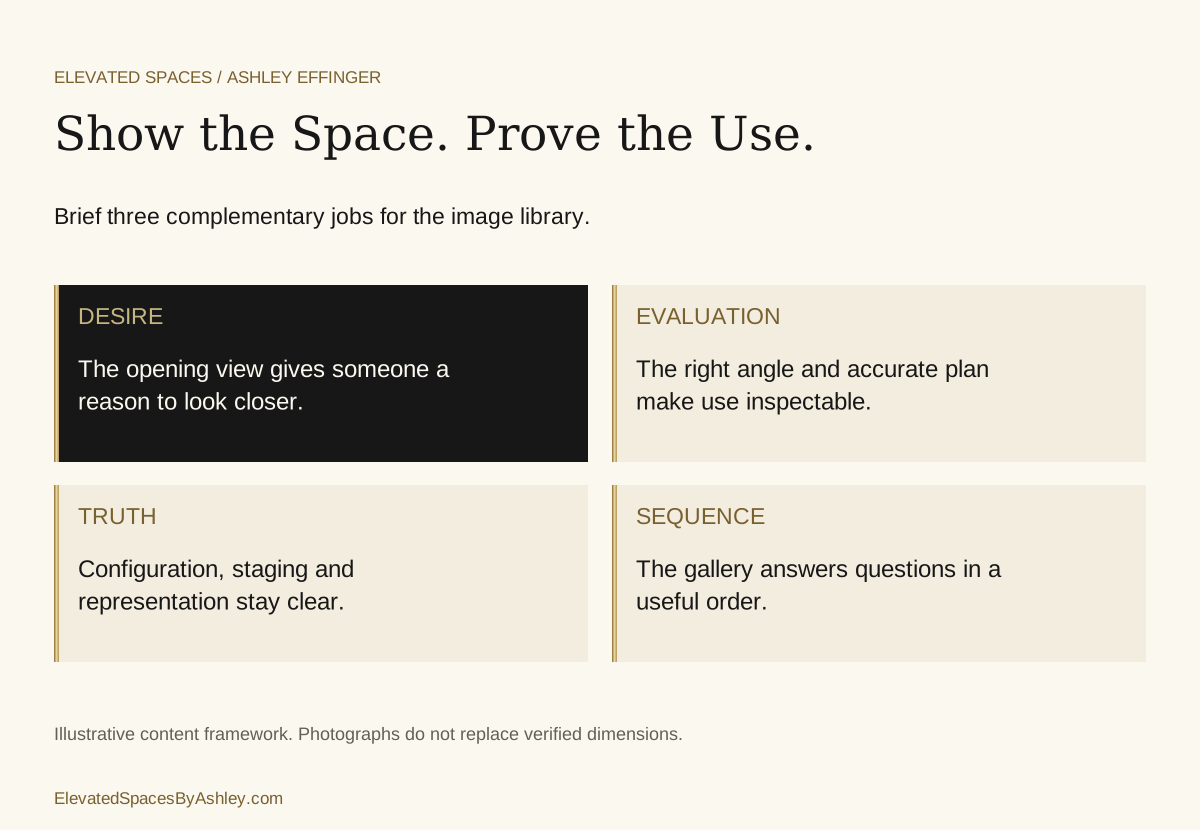
Read the framework as text
Show the Space. Prove the Use.. DESIRE: The opening view gives someone a reason to look closer.. EVALUATION: The right angle and accurate plan make use inspectable.. TRUTH: Configuration, staging and representation stay clear.. SEQUENCE: The gallery answers questions in a useful order.
Protect the truth through the edit
A model, a rendering and an available home are different kinds of evidence. Keep that distinction visible. Editing that makes the picture cleaner should not make the offering less accurate.
Editing should support clear presentation without misleading the viewer about permanent features or conditions. If a visual is a rendering, virtual staging or another representation, identify it clearly in its intended use.
The person publishing the asset should receive that context with the file.
Choose names and metadata that preserve practical information: property, space, layout where relevant, capture date and any usage qualification. Keep licensed usage details with the library.
A folder of anonymous filenames creates avoidable risk of using the wrong image later.
For an illustrative example, a bright corner model might photograph beautifully while most available homes have a different window arrangement. The solution is to show an accurate alternative and explain the distinction.
Hiding that difference creates a harder conversation during the tour.
Sequence the gallery like a useful conversation
The opening frame attracts. The next frames should help the viewer inspect and compare. If every image repeats “beautiful room” while the practical question remains unanswered, the gallery is decorative repetition with excellent lighting.
Test the sequence on a phone. Check cropping, legibility of any accompanying plan and whether the visitor can identify the represented space.
A carefully composed image can lose its practical meaning when the mobile crop removes the feature the caption describes.
Ask leasing to use the new sequence in a real explanation, then record what still needs to be clarified. That feedback can guide a small reshoot, a new diagram or better supporting copy.
Do not judge the library only by whether internal reviewers find it attractive.
The Luxury Audit Toolkit includes a claim-and-evidence review that can identify where an image is doing too little work. Use it before the next photography brief.
The Property Photography & Content Brief Builder translates those questions into a creative brief, shot plan, asset register and destination-specific approval workflow.
The best shot list begins with a prospect question someone is currently struggling to answer.
Multifamily Content Vault
Turn useful property questions into content with evidence, a clear purpose and a next step.
Get the Content Vault60-Second Luxury Audit Toolkit
Assess the experience before the tour begins.
Get the toolkitPut the perspective to work.
Explore positioning, marketing performance and experience strategy for luxury multifamily and Class A commercial properties.
Work with AshleyRelated published work
Continue with Ashley’s original articles. This website companion focuses on practical implementation.
- Apartment Photography Is Sales Strategy, Not Decoration · Multifamily Insiders
- The 60-Second Luxury Audit: What Prospects Notice Before Anyone Says Hello · Multifamily Insiders
- Stop Posting Amenities: Build a Content World Renters Want to Enter · Multifamily Insiders